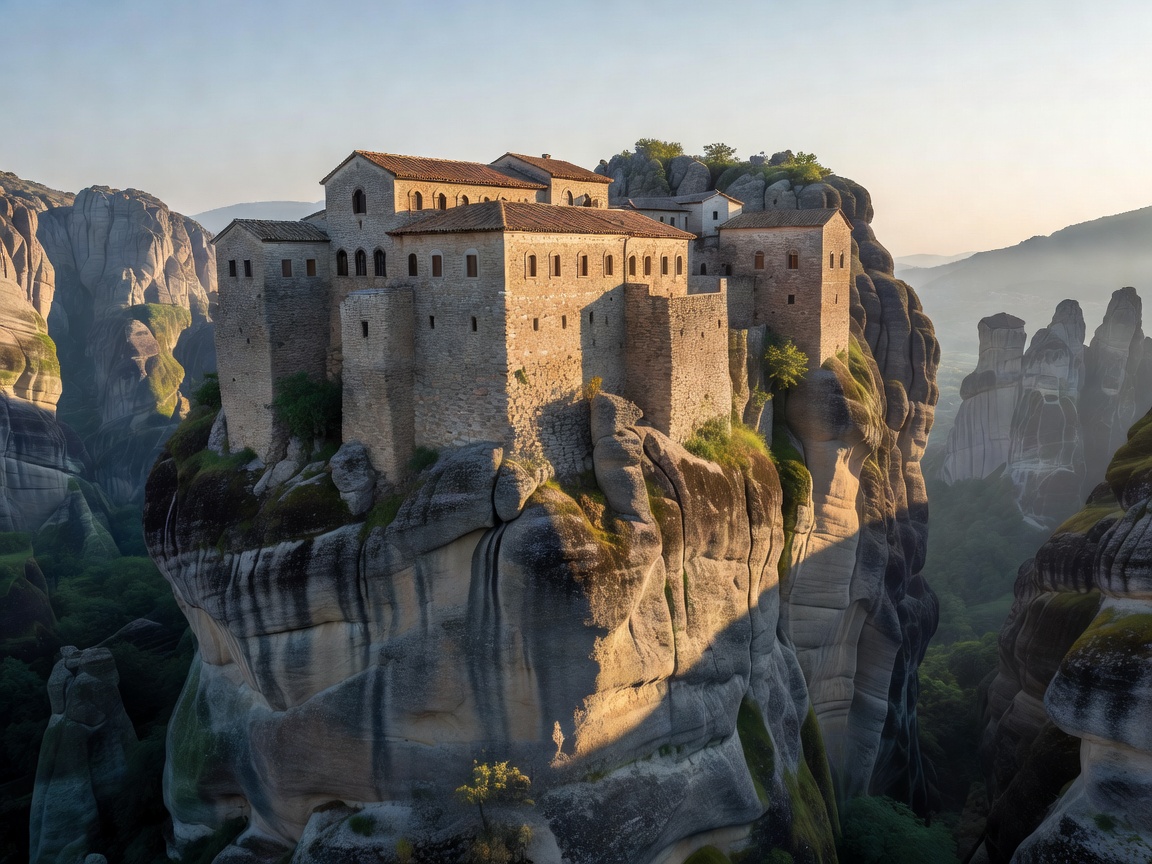
The Meaning of Meteora: "Suspended in the Air"
Beginning in the 11th century, hermit monks sought spiritual asceticism in the natural rock clefts of Meteora. In the 14th century, as political instability rocked Byzantine Greece, the Great Meteoron monastery was founded atop the highest rock. Materials were hoisted exclusively through windlasses, rope nets, and precarious wooden scaffolding.
Today, six monasteries remain fully active and welcome respectful visitors:
- Great Meteoron: The largest and oldest monastery, featuring post-Byzantine frescoes and historical codices.
- Varlaam: Known for its preserved 16th-century net hoist tower and expansive courtyard gardens.
- Roussanou: An exquisite convent perched delicately on a slender rock needle.
- Holy Trinity: The most dramatically isolated spire, famous worldwide from cinematic appearances.
Hiking Ancient Hermit Paths
While paved roads connect the monasteries, the ultimate way to feel the scale of Meteora is on foot. Ancient cobblestone mule paths (kalderimia) wind through lush hazelnut woods and silent gorges, far away from tour coaches. Sunset at the Psaropetra observation point provides an unforgettable view as golden rays wash across the dark sandstone monoliths.